
How to interpret blood pressure readings accurately: A Complete Guide dives into the nuances of understanding, interpreting, and monitoring blood pressure levels with precision, offering valuable insights into maintaining optimal health.
This comprehensive guide covers everything from the basics of blood pressure readings to lifestyle changes and herbal remedies for effective management.
Understanding Blood Pressure Readings
When it comes to interpreting blood pressure readings, it’s essential to understand the two numbers that are typically reported. These numbers represent the systolic and diastolic blood pressure values, which provide important information about the force of blood against the walls of your arteries.
Systolic Blood Pressure
Systolic blood pressure is the top number in a blood pressure reading and represents the pressure in your arteries when your heart beats and pumps blood out. This number is crucial as it indicates the maximum pressure exerted on the arterial walls during a heartbeat.
Diastolic Blood Pressure
On the other hand, diastolic blood pressure is the bottom number in a blood pressure reading and reflects the pressure in your arteries when your heart is at rest between beats. This number is equally significant as it shows the minimum pressure in the arteries.
Significance of Blood Pressure Readings
Blood pressure readings are essential for assessing overall health and detecting potential issues such as hypertension (high blood pressure) or hypotension (low blood pressure). Consistently high or low blood pressure levels can increase the risk of heart disease, stroke, and other serious health conditions.
Monitoring blood pressure regularly can help in the early detection and management of these conditions, promoting better cardiovascular health.
Factors Affecting Blood Pressure: How To Interpret Blood Pressure Readings Accurately
Factors such as lifestyle choices, stress, diet, and exercise can significantly impact blood pressure readings.
Lifestyle Factors Influencing Blood Pressure
- Smoking: Tobacco use can raise blood pressure and increase the risk of heart disease.
- Alcohol Consumption: Excessive drinking can lead to hypertension and negatively affect blood pressure levels.
- Physical Activity: Regular exercise helps maintain a healthy blood pressure range.
- Weight: Being overweight or obese can contribute to high blood pressure.
Impact of Stress on Blood Pressure Levels
- Chronic stress can lead to elevated blood pressure levels over time.
- Stress management techniques such as meditation, yoga, and deep breathing exercises can help lower stress-related blood pressure spikes.
Diet and Exercise on Blood Pressure
- Sodium Intake: High salt consumption can increase blood pressure, while a low-sodium diet can help maintain healthy levels.
- Healthy Eating: A diet rich in fruits, vegetables, whole grains, and lean proteins can support optimal blood pressure.
- Regular Exercise: Physical activity can strengthen the heart and improve blood circulation, leading to better blood pressure control.
Interpreting Blood Pressure Readings Accurately
Accurate measurement of blood pressure is crucial in assessing an individual’s cardiovascular health. Here are some guidelines to help you interpret blood pressure readings accurately.
Measuring Blood Pressure Correctly
When measuring blood pressure, it is important to follow these steps:
- Sit comfortably with your back supported and feet flat on the floor.
- Place the cuff on your upper arm at heart level.
- Inflate the cuff and listen for the heartbeat using a stethoscope.
- Record the systolic and diastolic pressure readings accurately.
Importance of Multiple Readings
It is recommended to take multiple blood pressure readings at different times to ensure accuracy. Factors such as stress, physical activity, and time of day can influence blood pressure levels. By taking multiple readings, you can get a more comprehensive understanding of your blood pressure profile.
Role of Cuff Size
The size of the cuff used to measure blood pressure can impact the accuracy of the readings. Using a cuff that is too small can result in falsely elevated readings, while a cuff that is too large can lead to falsely low readings.
It is important to use the correct cuff size based on the circumference of the upper arm for precise measurements.
Understanding Blood Pressure Categories
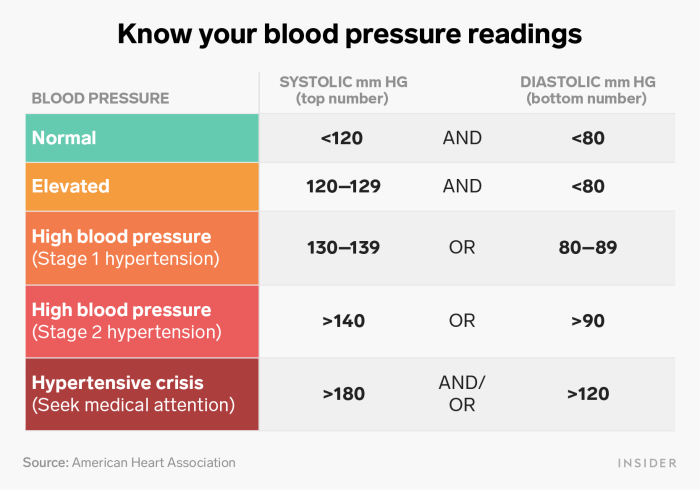
In order to accurately interpret blood pressure readings, it is crucial to understand the various categories that blood pressure measurements fall into. This includes normal, elevated, and high blood pressure categories, each with its own set of risks and implications.Normal Blood Pressure:Normal blood pressure readings typically fall below 120/80 mmHg.
This indicates that the pressure in your arteries is within a healthy range, reducing the risk of heart disease, stroke, and other cardiovascular issues.Elevated Blood Pressure:Elevated blood pressure is when your readings consistently range from 120-129 for systolic blood pressure and less than 80 for diastolic blood pressure.
While not classified as high blood pressure, elevated readings indicate a higher risk of developing hypertension in the future if not managed properly.High Blood Pressure:High blood pressure, also known as hypertension, is classified as having readings of 130/80 mmHg or higher.
This condition puts you at a significantly higher risk of heart disease, stroke, kidney disease, and other serious health complications if left untreated.Interpreting Blood Pressure Readings Based on Categories:It is essential to monitor and interpret your blood pressure readings based on these categories to understand your cardiovascular health status accurately.
Regular blood pressure checks and consultation with healthcare professionals can help you manage your blood pressure effectively and reduce the risk of associated complications.
Monitoring Blood Pressure at Home
Monitoring blood pressure at home can provide valuable insights into your cardiovascular health and help you and your healthcare provider make informed decisions. By regularly tracking your blood pressure readings, you can detect any fluctuations or abnormalities early on and take necessary steps to manage them effectively.
Benefits of monitoring blood pressure at home, How to interpret blood pressure readings accurately
- Convenience: Monitoring blood pressure at home eliminates the need for frequent visits to the doctor’s office, saving time and resources.
- Accuracy: Home blood pressure monitors are often calibrated for precise readings, providing reliable data for better management of hypertension.
- Early detection: Regular monitoring can help identify any sudden changes in blood pressure, allowing for prompt intervention and treatment.
Selecting a reliable blood pressure monitor
- Check for validation: Choose a monitor that has been validated by medical professionals or regulatory bodies to ensure accuracy.
- Proper fit: Select a monitor with the right cuff size for your arm to avoid inaccurate readings.
- User-friendly features: Look for monitors with easy-to-read displays, memory storage, and multiple user profiles for convenience.
Importance of tracking and documenting blood pressure readings
- Monitor trends: Keeping a record of your blood pressure readings over time can help you and your healthcare provider identify patterns and trends.
- Treatment effectiveness: Tracking your blood pressure can show how well your current treatment plan is working and if any adjustments are needed.
- Communication with healthcare provider: Sharing documented readings with your healthcare provider enables them to make more informed decisions regarding your care.
Lifestyle Changes for Blood Pressure Management
Managing blood pressure through lifestyle changes is crucial for overall health and well-being. By incorporating healthy habits into your daily routine, you can effectively control and regulate your blood pressure levels.
Role of Diet and Exercise
Proper nutrition and regular physical activity play a key role in managing blood pressure. Here are some strategies:
- Follow a balanced diet rich in fruits, vegetables, whole grains, and lean proteins.
- Limit your intake of sodium, saturated fats, and added sugars.
- Engage in at least 150 minutes of moderate exercise per week, such as brisk walking, cycling, or swimming.
Stress-Reducing Techniques
Stress can significantly impact blood pressure levels. Consider incorporating stress-reducing techniques into your daily routine:
- Practice mindfulness and meditation to reduce anxiety and promote relaxation.
- Engage in regular physical activity to release endorphins and combat stress.
- Ensure you get an adequate amount of sleep each night to support overall well-being.
Herbal Remedies for Blood Pressure
Herbal remedies have been used for centuries to manage various health conditions, including high blood pressure. These natural remedies are often sought after for their potential benefits and fewer side effects compared to traditional medications.Some popular herbal remedies used for managing blood pressure include:
Hawthorn
Hawthorn is a herb known for its antioxidant properties and ability to improve blood flow. It may help in lowering blood pressure by dilating blood vessels and reducing resistance in the arteries. However, individuals taking blood pressure medications should consult their healthcare provider before using hawthorn, as it may interact with certain medications.
Garlic
Garlic is another herb that has been studied for its potential effects on blood pressure. It is believed to help relax blood vessels and improve circulation, which can contribute to lowering blood pressure. Some studies suggest that garlic supplementation may have a modest effect on reducing blood pressure levels.
Hibiscus
Hibiscus tea is a popular herbal remedy that has shown promising results in lowering blood pressure. It is rich in antioxidants and may help in reducing systolic and diastolic blood pressure levels. However, individuals with low blood pressure or on blood pressure medications should use hibiscus with caution, as it may cause further lowering of blood pressure.It is essential to consult with a healthcare provider before incorporating herbal remedies into your blood pressure management plan, especially if you are already taking medications.
While herbal remedies can offer potential benefits, they may also pose risks and interact with existing treatments, emphasizing the importance of informed decision-making and personalized healthcare.
Summary
In conclusion, mastering the skill of interpreting blood pressure readings accurately is crucial for maintaining overall well-being. By following the guidelines and tips provided in this guide, you can take proactive steps towards a healthier lifestyle.
FAQ Guide
How often should I measure my blood pressure at home?
You should ideally measure your blood pressure at the same time every day, preferably in the morning before eating or taking any medications.
Can stress affect my blood pressure readings?
Yes, stress can temporarily increase your blood pressure. It’s important to relax and remain calm before taking a reading for accuracy.


